


Based on a U.S. transition guide, revised August 2020
Life After Secondary School: Education, Work & Independence
Explore your options, build on your strengths and plan the support you need for your next chapter.
Transition planning brings together your interests, learning goals, work ambitions and everyday support needs. This resource helps young people with disabilities, caregivers and educators take practical steps towards life after school.
The guide comes from the U.S. Department of Education and describes planning in the United States. This page keeps its general planning ideas and leaves out U.S. laws, programmes, funding and deadlines.
Illustration created for this page
YOUR VOICE
Your Future Starts With What Matters to You
Good planning starts with your strengths, interests, preferences and support needs. You can share your answers in words, pictures, writing or with communication aids.
What do I enjoy?
What am I good at?
What would I like to learn or try?
What support helps me participate?
Independence can include ongoing support. Your goals and choices should remain central to the plan.
PATHWAYS
Explore Your Options
Pathways can overlap and change over time. Nobody should be placed on a route because of a diagnosis alone.
Illustration created for this page
PATHWAY 1
Further Education and Training
Learning can continue after school in many forms.
- College, university, vocational or technical training (for example TVET in Kenya) and other learning opportunities
- Compare courses: what they teach, how accessible they are, what support is offered and what they cost
- Check the details with each institution. This page does not list entry requirements, places or funding
PATHWAY 2
Employment and Work Experience
Trying work helps you learn what suits you.
- Explore careers, visit workplaces and try internships, apprenticeships or learning through work
- Choose experiences that connect to your interests and goals
- No job placements or grants are promised here
Illustration created for this page
Illustration created for this page
PATHWAY 3
Everyday Life and Community Participation
Everyday skills grow alongside education and work.
- Travel, managing routines, communication, budgeting and relationships
- Knowing how to find and ask for support
- Practise at your own pace, in places you feel comfortable
YOUR PLAN
A Practical Route From Ideas to Action
A flexible planning framework inspired by the guide. You can move back and forth between stages and repeat them as your goals change. It is not a fixed timetable.
1
Understand yourself
Identify strengths, interests and support needs.
2
Explore possibilities
Research courses, careers and community opportunities.
3
Build experience
Practise relevant skills and try suitable learning or work activities.
4
Arrange support
Identify people, adjustments, transport and resources.
5
Review your plan
Agree responsibilities, check progress and adapt goals.
BEFORE CHOOSING A COURSE
Before Choosing a Course
Contact the institution directly. Support you had at school may not continue automatically, so ask.
- Does the course match my interests and goals?
- What are the entry requirements and application dates?
- What accessibility and learning support are available?
- How do I request adjustments or accessible materials?
- What documents might the institution require?
- What are the costs, transport arrangements and available funding options?
BEFORE STARTING WORK
Before Starting Work
Questions to ask an employer, trainer or adviser.
- What will my job tasks and working environment be?
- What training and supervision will I have?
- What communication and accessibility needs can be met?
- What are the travel arrangements and working hours?
- Who can help if there are difficulties?
- What chances are there to learn and progress?
Approaches the guide discusses
- Supported employment: working with ongoing support
- Job coaching: a coach helps you learn and settle into a job
- Tailored job roles: a job shaped around your strengths and needs
- Self-employment: running your own work
These are approaches described in a U.S. guide. Availability in Kenya varies, and no placements or grants are promised here.
YOUR SUPPORT TEAM
Build a Team Around Your Goals
The right team differs for everyone. Coordination means agreeing who does what, by when, and how you will review progress.
Family and trusted supporters
People who know you well and back your choices.
Teachers and career advisers
Help you explore options and prepare.
Education or training providers
Explain courses, entry and support.
Employers and workplace mentors
Show you the work and help you learn.
Disability and community services
Relevant services that can support you.
You
Your goals and choices come first
Agree who will do what, when it will happen and how progress will be reviewed. Decisions stay with the young person, and support is not a transfer of control.
START SMALL
Start With One Next Step
A checklist to discuss with your support team. There is nothing to fill in or submit here.
- Identify a goal that matters to me.
- List my strengths and the support that helps.
- Research suitable education or employment options.
- Prepare questions for a provider or adviser.
- Gather relevant records and examples of my achievements.
- Consider transport, accessibility and costs.
- Agree an action, a responsible person and a review date.
This is an on-page checklist, so there is no form. To keep a copy, use your browser’s print option.
THE ORIGINAL U.S. GUIDE
Understanding the Original U.S. Guide
These are terms used in the U.S. source. They are explained for background and do not describe rights or services in Kenya.
Individualized Education Program (IEP)
In the U.S. source, a written plan for a student with a disability in school. Kenyan schools may use different names and processes, so ask your school.
Individualized Plan for Employment (IPE)
In the U.S. source, a plan made with a vocational rehabilitation counsellor describing a person’s employment goal and services.
Vocational Rehabilitation (VR)
A U.S. public programme that helps people with disabilities prepare for, find and keep work. It is not a Kenyan entitlement.
Summary of Performance (SOP)
In the U.S. source, a summary of a student’s achievement and functional performance, with recommendations for reaching their goals after school.
Laws, funding amounts, eligibility rules and deadlines in the guide are specific to the United States and are not repeated here. In Kenya, check requirements with the relevant institution or service. See also our page on the Persons with Disabilities Act.
THE ORIGINAL
Read the Original Guide
The full document, unchanged.
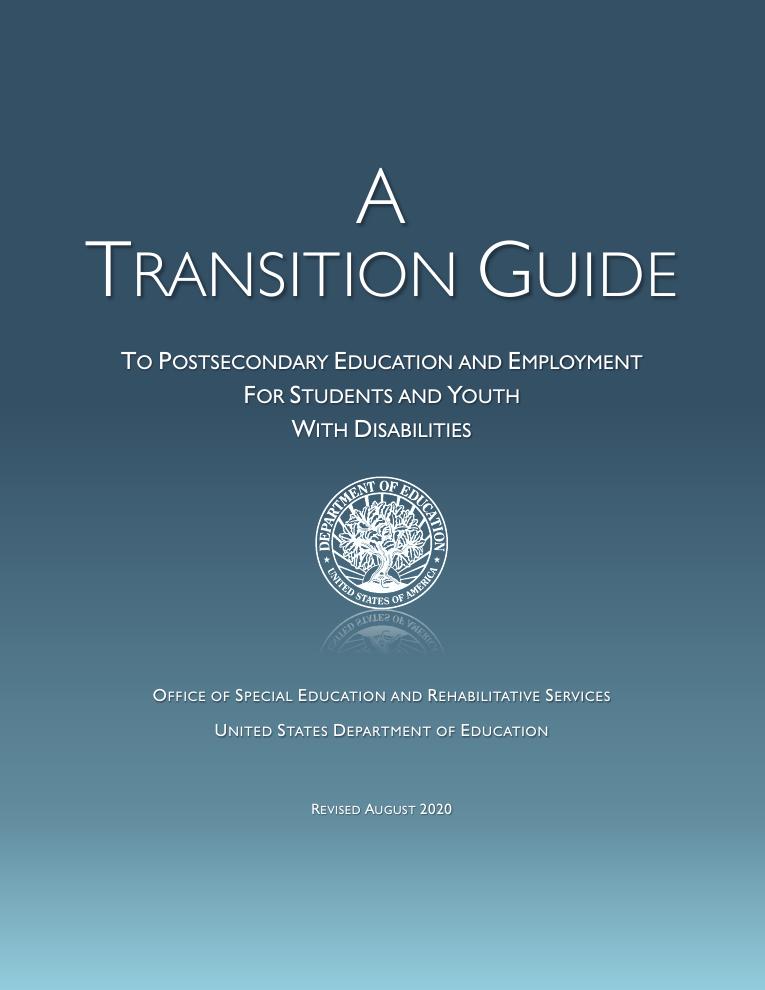
Cover of the original guide
A Transition Guide to Postsecondary Education and Employment for Students and Youth with Disabilities
Publisher: U.S. Department of Education, Office of Special Education and Rehabilitative Services.
Revised August 2020 · 60 PDF pages · about 1 MB
Main themes: planning for life after secondary school, coordinating education and employment support, exploring further education and work, and supporting young people to make their own decisions.
U.S. context
The guide addresses transition planning in the United States and is unchanged. It is not medical, legal or Kenyan policy advice. The PDF opens only when you choose it.
NEXT STEP
Take the Next Step With Confidence
Choose one goal, start one conversation and identify the support that can help you move forward.