


AACAP & APA parent resource · Revised July 2013
ADHD Medication: A Guide for Parents and Caregivers
Understand treatment options, prepare for conversations with your child’s healthcare team, and learn what to observe as you support your child at home and school.
This page summarises a US parent guide revised in July 2013, prepared by the American Academy of Child & Adolescent Psychiatry and the American Psychiatric Association. It is not a Kenyan clinical guideline. Treatment decisions should be made with a qualified clinician. Newer official resources are linked on this page.
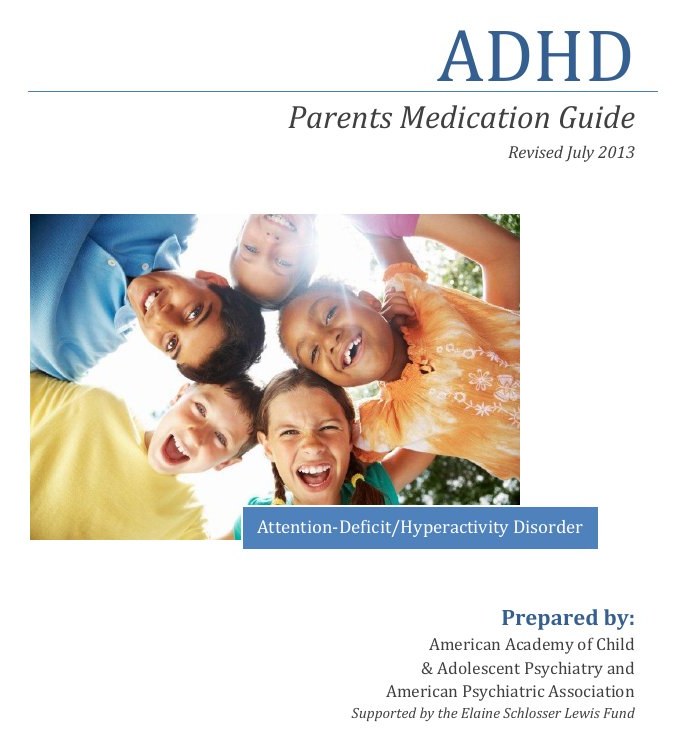
Cover of the 2013 guide (PDF)
THE BIGGER PICTURE
A Treatment Plan Built Around Your Child
The 2013 guide describes treatment as a plan, not a single medicine. The aim is to support your child’s strengths and everyday life, not to make a child quiet or compliant.
1
Assessment
Looks at development, difficulties across settings, family observations and school feedback.
2
Shared goals
Parents, child and clinician agree what to work on.
3
Individual treatment plan
Built around the child’s needs and age.
4
Follow-up
Regular reviews to see what is helping.
Three complementary areas of support
Parent guidance
Practical strategies and parent training that help families respond to ADHD-related behaviour at home.
School and learning support
Everyday support that helps a child take part in learning, with teachers and families sharing what works.
Medication, when recommended
One option a treating clinician may recommend, depending on the child’s age, needs and response.
Age matters. As described by the US CDC, American Academy of Pediatrics recommendations are parent training in behaviour management first for children under six, and medication alongside behavioural support for older children. This is not an automatic prescription pathway. Other needs, such as learning or anxiety difficulties, may also need assessment. See the CDC treatment overview.
MEDICINE OPTIONS
Understanding the Main Medication Options
Two broad categories of medicine are discussed in the guide.
Stimulant medicines
A main category of ADHD medicine discussed in the 2013 guide. A clinician may recommend one to help with attention, activity and impulse control. How well it works and what side effects occur vary from child to child.
Non-stimulant medicines
A different category that a clinician may consider depending on the child’s needs and how they respond to treatment. Benefits, side effects and suitability also vary between individuals.
The 2013 list of medicines is not reproduced here and is not a list of what is available today. This page gives no brand comparisons, doses, rankings or claims about availability in Kenya. The prescribing clinician decides the medicine, its form, timing and any dose changes.
BEFORE THE APPOINTMENT
Questions to Ask Your Child’s Clinician
Take this list with you. These are questions for discussion, not instructions for adjusting treatment yourself.
1. What changes are we hoping treatment will help with?
2. Why are you recommending this option for my child?
3. When should we expect to review its effects?
4. Which side effects should we watch for?
5. Which symptoms require urgent medical attention?
6. Could other medicines or supplements affect treatment?
7. What should we do if a dose is missed?
8. How should the medicine be stored and administered?
9. What follow-up checks will be needed?
10. How can we involve my child and their school?
11. What should we discuss if cost or access becomes difficult?
DURING TREATMENT
Notice What Changes in Everyday Life
Watching and noting changes helps the whole team decide what is working.
Possible areas of improvement to discuss
- Starting or completing tasks
- Managing routines
- Taking part in learning
- Getting along in daily interactions
Changes to record and discuss
- Appetite
- Sleep
- Mood
- Headaches or stomach discomfort
- Anything your child says feels different
Which effects matter depends on the medicine.
Bring your own observations, your child’s view and appropriate feedback from teachers to each follow-up. Clinicians may also check growth and other physical measures when appropriate. There is no universal monitoring schedule on this page, so ask your clinician what suits your child.
Medication safety
- Follow the prescribed instructions.
- Discuss changes, breaks or stopping treatment with the prescriber.
- Never share prescription stimulants.
- Store them securely, away from children and other people.
- Seek urgent medical help for a suspected overdose or severe reaction.
Prescription stimulants can be misused, and they carry risks as well as benefits. For updated safety information, see the FDA prescription-stimulant safety information.
HOME, SCHOOL AND HEALTHCARE
Support Works Best When People Work Together
Children do best when the adults around them share goals and information.
Explain it simply
Explain treatment in language your child understands.
Listen
Listen to your child’s questions and concerns.
Agree realistic goals
Agree realistic goals with the healthcare team.
Share with care
Share relevant information with teachers while respecting privacy.
Routines and organisation
Support routines, organisation and taking part in class.
Behavioural and psychosocial support. The 2013 guide stresses that medicine works best alongside strategies at home and school, such as parent training, clear routines and school-based supports. The guide also discusses US educational rights and systems. Those do not apply in Kenya. For school support here, talk with your child’s school and healthcare team about what is available.
GROWING INDEPENDENCE
Preparing for the Next Stage
For families supporting teenagers and young adults.
Changes ahead
Moving to a new school, college or work changes routines, appointments and who is responsible for treatment. Plan for these changes early.
Gradual involvement
Let your teenager take part in decisions step by step, and keep continuity of care as they take on more themselves.
Keep medicine secure
Prescribed medicine is for the person it was prescribed for. Keep it secure and refuse requests to share it.
FAQ
Common questions
Brief answers based on the 2013 guide. They are not personal medical advice.
Does every child with ADHD need medication?
No. Treatment choices depend on the child’s age and needs. The guide describes behavioural and school support as important parts of a plan, and medication as one option a clinician may recommend.
How will we know whether the treatment plan is helping?
By reviewing it with the clinician over time, using your observations, your child’s view and teacher feedback. Ask your clinician when and how to review.
What if my child seems different or experiences side effects?
Note what you see and talk to the prescriber promptly. Do not stop or change medicine on your own. Seek urgent medical help for severe symptoms.
Can treatment needs change as my child grows?
Yes. The guide says symptoms and demands change as children grow, so the plan is reviewed over time.
What if my child has another condition or learning need?
Other conditions and learning needs are common alongside ADHD. The guide says a thorough assessment looks at them too, and they can shape the treatment plan.
What should we ask about supplements or alternative treatments?
The guide says many such treatments have not been shown to work for ADHD, and some may be harmful. Ask your clinician about any supplement or treatment before using it.
THE FULL GUIDE
Read the Full Guide and Explore Updated Resources
The 2013 guide is unchanged. For current treatment and safety information, use the updated sources.
Cover of the 2013 guide
ADHD Parents Medication Guide
Prepared by the American Academy of Child & Adolescent Psychiatry and the American Psychiatric Association.
Revised July 2013 · US resource · 45-page PDF
What the guide contains
- Understanding ADHD and choosing treatment (PDF page 2)
- Medication questions and treatment reviews (page 7)
- Side effects and safety (page 17)
- School and psychosocial support (page 21)
- Evaluating alternative-treatment claims (page 24)
- Transition to college and adulthood (page 25)
- Further resources and references (page 28)
Updated official resources
Separate from the 2013 guide:
- AACAP Parents’ Medication Guides
- CDC: Treatment of ADHD
- FDA: Prescription-stimulant safety information
These organisations do not endorse NeuroReHub. The 2013 guide’s telephone directory and external links are not reproduced because they have not been checked.
The 2013 guide is a US resource and is not medically reviewed by NeuroReHub. AACAP maintains a page that lists its currently available medication guides.
NEXT STEPS
Feel Better Prepared for the Next Conversation
Explore related ADHD resources and bring your questions, observations and concerns to your child’s healthcare team.