


Community Based Inclusive Development
Practical learning for more inclusive communities.
Explore six training modules that help practitioners, organisations and communities understand disability inclusion and put it into everyday practice.
From accessible healthcare and inclusive education to livelihoods, community participation and self-advocacy, this manual provides learning objectives, discussion activities and guidance for facilitators.
Source document: Community Based Inclusive Development Training Manual, Ministry of Labour and Social Protection, State Department for Social Protection and Senior Citizen Affairs, as shown on its cover. The manual does not state a publication year. This page is a reader’s guide to the Ministry’s manual. It is not authored by this website, and it is not a course, enrolment or qualification.
The manual cover (PDF)
6
training modules
5
core CBID components
Groups
discussions and practical activities
full manual available
WHO IT SUPPORTS
Learning that connects people, practice and community
The manual is written for people who will run, join or benefit from community-based disability inclusion work.
Trainers and community practitioners
Explore learning objectives, facilitation notes and participatory exercises.
Organisations and community groups
Strengthen advocacy, collaboration and inclusive community action.
Educators and service providers
Recognise barriers and explore ways to make learning and services more accessible.
Persons with disabilities and families
Understand the themes, contribute lived experience and participate in decisions.
What the manual is for. It is a standard training tool to build trainers’ capacity, increase community awareness and participation, show practical approaches, strengthen coordination among stakeholders, and offer user-friendly content for families and communities. It aims to support inclusive development by, for and with persons with disabilities, who remain leaders, contributors and decision-makers throughout. Source: PDF page 10
THE SIX MODULES
Which module is relevant to you?
An introduction to CBID, then the five CBID components. Each module has main topics, learning outcomes, a practical takeaway and a link to the manual.
1
Understanding CBID
Introduction to Community-Based Inclusive Development
Explore module 1 →
2
Inclusive health
Health component
Explore module 2 →
3
Education throughout life
Education component
Explore module 3 →
4
Livelihood and opportunity
Livelihood component
Explore module 4 →
5
Participation in everyday life
Social component
Explore module 5 →
6
Voice, leadership and empowerment
Empowerment component
Explore module 6 →
1
MODULE 1 · INTRODUCTION TO COMMUNITY-BASED INCLUSIVE DEVELOPMENT
Understanding CBID
Explains what CBID is, its five components and the benefits of inclusive community development.
Manual: PDF page 11 (printed page 8)
MAIN TOPICS
Introduction to CBID and its five componentsBenefits for persons with disabilities and for communitiesInternational, regional and Kenyan legal and policy frameworks discussed in the manual
LEARNING OUTCOMES FROM THE MANUAL
- Define CBID
- State the components of CBID
- State the benefits of CBID
PRACTICAL TAKEAWAY
Inclusion involves shared action, participation and the removal of barriers across community life.
2
MODULE 2 · HEALTH COMPONENT
Inclusive health
Looks at health as physical, mental and social well-being, and at how services can become accessible and welcoming.
Manual: PDF page 18 (printed page 15)
MAIN TOPICS
The concept of health and inclusive healthcareBarriers to health servicesHealth promotionPreventionMedical careRehabilitation and habilitationAssistive technology
LEARNING OUTCOMES FROM THE MANUAL
- Define the concept of health
- Explain the concept of inclusive health
- Identify and address barriers to healthcare services for persons with disabilities
PRACTICAL TAKEAWAY
Inclusive health means everyone can reach health services without discrimination, because barriers are removed and diverse needs are accommodated. It connects accessible services, appropriate support and referral with participation in community life.
3
MODULE 3 · EDUCATION COMPONENT
Education throughout life
Follows learning from early childhood to adulthood and looks at what helps learners take part.
Manual: PDF page 48 (printed page 45)
MAIN TOPICS
Introduction to education and barriers to participationEarly childhood care and educationPrimary educationSecondary and higher educationNon-formal educationLifelong learning, including adult learning
LEARNING OUTCOMES FROM THE MANUAL
- Describe key concepts in education
- Understand the importance of education in CBID
- Identify and address barriers to education for persons with disabilities
PRACTICAL TAKEAWAY
Inclusive education is more than placing learners in one classroom. It also means giving every learner the support, understanding and opportunities they need.
1
Early childhood
Early childhood care and education
2
Primary
Primary education
3
Secondary and higher
Secondary and higher education
4
Non-formal
Learning outside the regular school system
5
Lifelong learning
Adult learning and later opportunities
Module 3 learning journey. The manual treats education as broader than schooling: it starts at birth at home and continues through adult life. It looks at transitions into further education or work, accessible environments, flexible teaching, family involvement, and collaboration between schools and communities. It does not suggest that a person’s diagnosis determines their educational potential.
4
MODULE 4 · LIVELIHOOD COMPONENT
Livelihood and opportunity
Explores how skills, work, financial services and social protection support participation, guided by each person’s interests, goals and abilities.
Manual: PDF page 60 (printed page 57)
MAIN TOPICS
Introduction to livelihoodSkills developmentWage employmentSelf-employmentFinancial services and literacySocial protection
LEARNING OUTCOMES FROM THE MANUAL
- Describe key concepts in livelihood in relation to CBID
- State the key elements under the livelihood component
- Describe the role of CBID and its desirable outcomes
PRACTICAL TAKEAWAY
A CBID programme that leaves out skills and livelihood for youth and adults is incomplete. Examples of grants, loans or social protection in the manual are for discussion, not offers of funding.
5
MODULE 5 · SOCIAL COMPONENT
Participation in everyday life
Connects belonging, relationships, autonomy and personal choice to everyday participation.
Manual: PDF page 76 (printed page 73)
MAIN TOPICS
Social rolesPersonal assistanceRelationships, marriage and familyCulture and artsRecreation, leisure and sportsJustice
LEARNING OUTCOMES FROM THE MANUAL
- Define social roles
- Describe the importance of social roles
- Identify and address barriers to community participation
PRACTICAL TAKEAWAY
Taking part in social life shapes identity, self-esteem and quality of life. The module also looks at support for parents and caregivers, challenging stigma and barriers to justice.
6
MODULE 6 · EMPOWERMENT COMPONENT
Voice, leadership and empowerment
Looks at how accessible communication, self-advocacy, collective action and leadership support meaningful participation.
Manual: PDF page 93 (printed page 90)
MAIN TOPICS
EmpowermentAdvocacy and communicationOrganisations of and for persons with disabilitiesCommunity mobilisationCommunity groupsPolitical participation
LEARNING OUTCOMES FROM THE MANUAL
- Describe key concepts of empowerment
- State the importance of advocacy and communication
- Describe the roles and importance of OPDs
PRACTICAL TAKEAWAY
Empowerment is about having a voice, making decisions, being independent and being respected as an equal citizen.
Printed page numbers are the numbers on the manual’s pages. PDF page links open the manual at that page in most browsers; if a link does not jump on your device, use the printed page number with the full download link. Session timings in the manual vary between its module outlines and detailed sessions, so this page does not give a fixed course length.
ACTIVITIES
Explore. Discuss. Put ideas into practice.
Three activities from the manual, each with a short preview. Open the instructions for the steps and prompts.
ACTIVITY A
Identify barriers to healthcare
Based on Topic 2.1.3, PDF pages 20 and 21
A group exercise that connects learning with community experience.
Open the instructions and prompts
The five categories used in the exercise: physical, communication, attitudinal, financial, and policy and system barriers.
The group task:
- The facilitator presents the five categories with brief examples.
- Each group is assigned one barrier type.
- Each group identifies two examples of that barrier in their community and suggests one possible solution.
- Groups present back to everyone, and the facilitator brings the solutions together in a visual chart.
The manual’s detailed notes also describe knowledge barriers, such as limited awareness of rights and services.
ACTIVITY B
Explore assistive technology
Based on Topic 2.6, PDF pages 40 to 47
A group activity that looks at how everyday tools help people take part.
Open the instructions and prompts
The group task:
- The facilitator presents the main categories of assistive technology on a chart or slides.
- Each group is assigned one category, lists examples and explains how they are used.
- Groups present, and the facilitator adds missing examples.
- If real devices or pictures are available, they are shown to make the activity practical.
See the illustrated examples in the next section.
ACTIVITY C
Discuss skills, confidence and opportunity
Case study from the training manual · PDF pages 72 and 73
Ocak, in Uganda, had polio as a child, which left him with severe mobility problems and shook his self-confidence. He did not think he could support a family. A community-based rehabilitation programme trained him in bike repair, with a training placement negotiated with an experienced repairer. After three months he had the skills and enough savings for a basic set of hand tools. The manual says he now works from under a tree with a steady queue of customers and has taken on four trainees, two of whom have disabilities.
Open the instructions and prompts
The manual uses the case for a role-play on confronting self-exclusion. Its discussion prompts include:
- What belief did Ocak hold about himself and his future before the programme, and how was that an internal barrier to participation?
- How did practical training and mentorship challenge that belief and help him rebuild his confidence?
- How did becoming a business owner and trainer help include others, including two trainees with disabilities?
- Beyond skills and resources, what social and psychological factors lead people to exclude themselves from economic and social life?
This is a case study quoted from the manual, with its location and circumstances. It is not a testimonial or a result from this website.
These are previews of the manual’s activities. This page has no assessments, completion scores or certificates.
ASSISTIVE TECHNOLOGY
Everyday tools that support participation
Selected examples from Topic 2.6 of the manual, showing what each kind of tool helps someone do.
Mobility devices
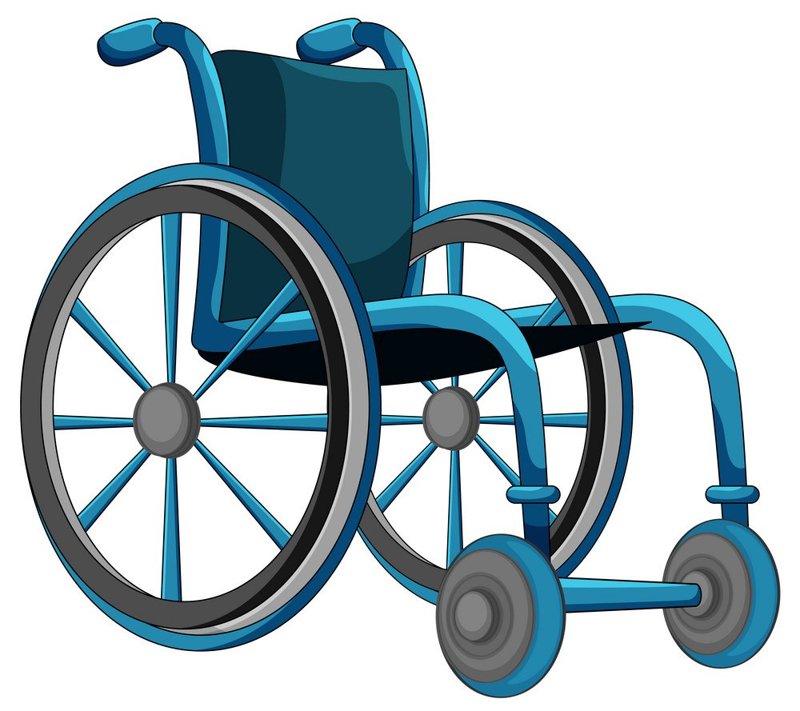
Wheelchair
Helps a person move from place to place.
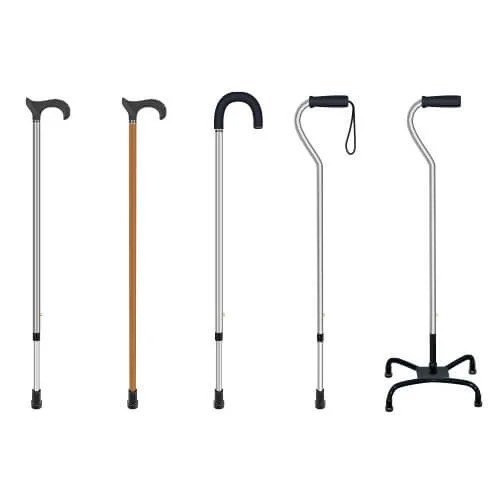
Walking sticks and canes
Give support and balance when walking.
Prosthetics, orthotics and orthopaedic shoes

Orthoses
Support or correct a body part, such as a spinal brace, a hand or leg splint, or calipers.
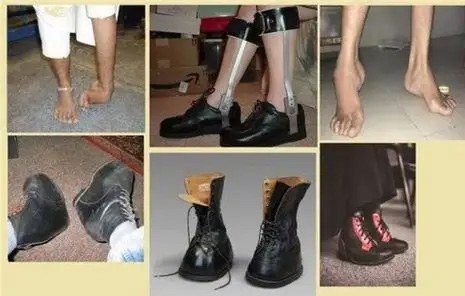
Orthopaedic shoes
Custom shoes that support or correct the foot. The manual says prostheses, orthoses and orthopaedic shoes are usually custom-made and fitted by trained personnel in specialised workshops or centres. A prosthesis replaces a body part, such as an artificial leg or hand.
Daily living devices

Adapted cutlery and cups
Make eating and other daily tasks easier to do independently.

Shower seats and stools
Allow bathing while seated, safely and with more independence.
Vision devices

Magnifiers
Help people with low vision read print and see detail. The manual also lists large print books, spectacles, white canes, braille systems, audio devices and screen readers.
Hearing devices
Help people communicate and interact. Examples in the manual: hearing aids, headphones for watching television, amplified telephones, text telephones, and visual cues such as a light when the doorbell rings.
Communication devices
Help people who find speech hard to understand or produce, by supporting or replacing speech. Examples: communication boards with pictures, symbols or letters, request cards, and electronic speech output devices.
Cognitive and organisational support
Help people remember tasks, manage time and prepare for activities. Examples: lists, diaries, calendars, schedules, and phones or other electronic organisers.
Illustrations are reproduced from the training manual at their original size, for education. The manual prints no separate credit for them, and nothing here is a product sold or endorsed by this website.
FOR FACILITATORS
Using the manual in a training session
A short sequence based on how the manual organises its sessions.
1
Choose the module
Pick the module and review its learning outcomes.
2
Prepare
Read the facilitator instructions and prepare the materials you need.
3
Plan access
Plan accessible ways for every participant to contribute.
4
Facilitate
Use the suggested discussions, demonstrations, group work or case studies.
5
Review
Go over key messages and discuss how they apply in your community.
Timings and materials
The manual suggests session timings and materials such as flipcharts, markers, presentations and demonstration items. Timings differ between some module outlines and detailed sessions, so this page does not give a fixed course length. Check the manual and adapt to your group.
What this page is not
This page is a reader’s guide to a manual. It is not an accredited course, an enrolment programme or a qualification.
CROSS-CUTTING PRINCIPLES
Inclusion belongs in every activity
The manual says these principles must be considered across all CBID components and modules. Source: PDF page 108 (printed page 105)
Accessibility
Identify and remove barriers in spaces, information, communication and participation: physical, communication, social and attitudinal.
Universal design
Consider varied needs when designing environments, tools and learning materials, so they are usable by everyone.
Reasonable accommodation
Provide adjustments and support that enable equal participation, such as ramps, accessible transport, adaptive equipment, sign language interpretation, braille or simplified formats.
Human rights and participation
Involve persons with disabilities in planning, delivery and review, guided by equality and non-discrimination.
This page follows the same principles: headings and links are reachable by keyboard, expandable sections open and close with the keyboard, images have descriptions, text and colour contrast are designed for easy reading, and information is not given by colour alone.
THE FULL MANUAL
Read the complete guidance
The full manual has the facilitator notes and detail that this page summarises.
Cover of the manual
About this document
- Title: Community Based Inclusive Development Training Manual
- Publisher attribution: Ministry of Labour and Social Protection, State Department for Social Protection and Senior Citizen Affairs
- Format: PDF
- Length: 110 PDF pages, including front matter and covers
- Publication year: not stated in the manual
THREE RESOURCES, THREE PURPOSES
CBID Awareness Booklet
Understanding CBID: its approach, principles and five components.
CBID Strategic Framework 2026–2030
Exploring strategic direction, implementation and how progress is to be measured.
Understanding CBID, exploring strategic direction, and supporting practical learning are different purposes. This page is a reader’s guide to the Ministry’s manual. It is not authored by this website, and this website does not deliver the programmes described. Legal references are material discussed in the manual, not independently verified current law.